AI in the Everyday Life of a Malawian
From hospital queues to broken tipper trucks — how artificial intelligence is quietly becoming part of daily life in Malawi.
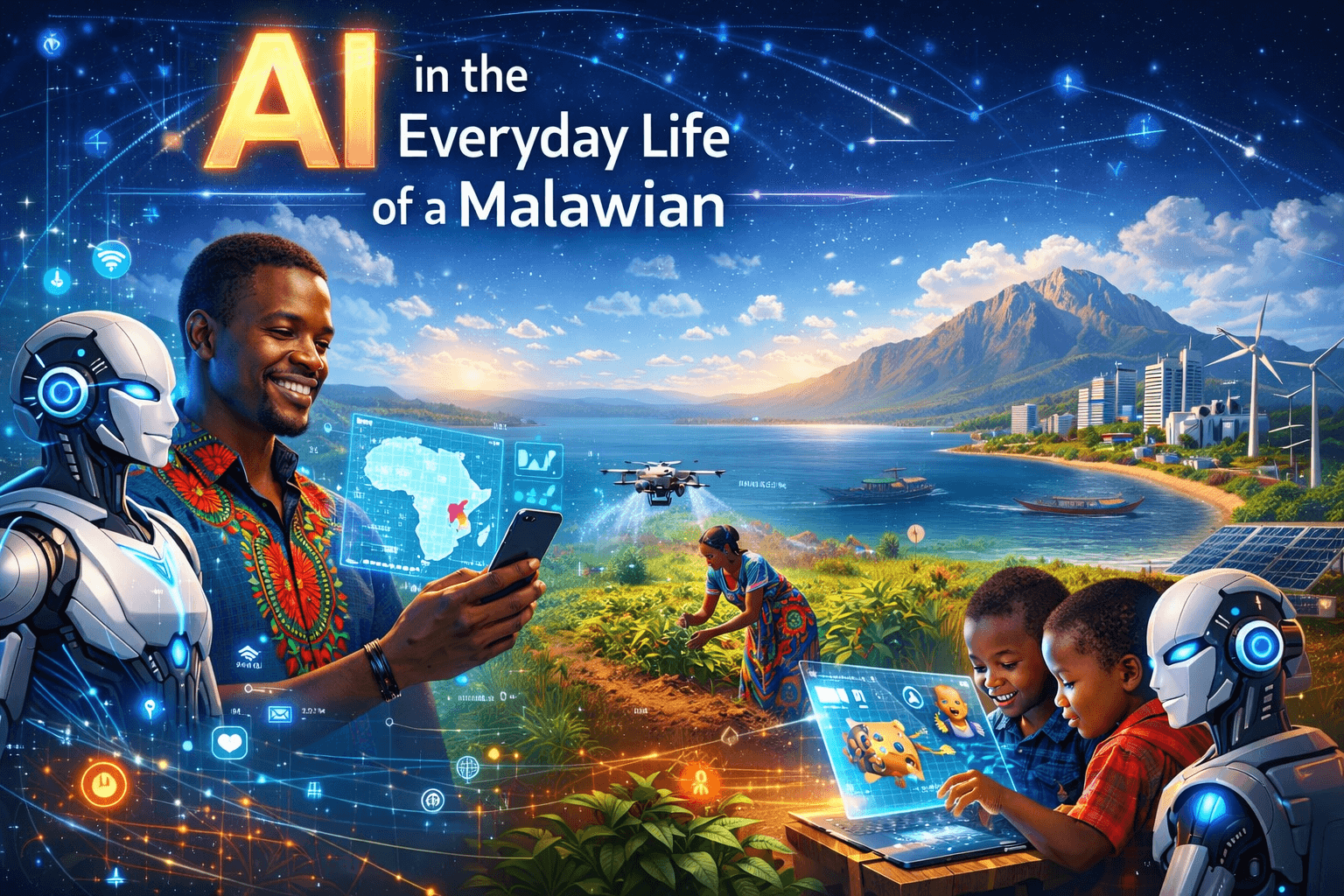
AI Is Not Just for Silicon Valley
When most people hear “AI,” they imagine robots, self-driving cars, or some billionaire in America building the future.
But the truth is simpler.
AI is already part of everyday life in Malawi. Not in flashy ways. Not in futuristic labs. But in hospital corridors, garages, farms, and classrooms.
And sometimes, you only realize it when you really think about it.
The Hospital Moment
One time I escorted a family member to a public hospital. He had some blood samples taken, which were tested at the lab. After the testing was done, I was asked to collect the results and submit them to the doctor for inspection.
Being a public hospital, we had to wait for hours before our turn.
As we were sitting there, I had a thought.
The illness wasn’t anything extremely sensitive or complicated. So I asked my relative if we could experiment a bit. We took a picture of the lab results and uploaded them to ChatGPT, asking it to interpret them for us.
Within seconds, it explained what the numbers meant. It even suggested possible causes and treatment options.
Hours later, when we finally saw the doctor, the explanation we received was almost exactly the same — including the prescriptions.
That moment changed how I see AI.
It wasn’t replacing the doctor. It wasn’t diagnosing independently. But it gave us understanding while we waited. It reduced anxiety. It made us informed before we even stepped into the consultation room.
For a country where hospital queues are normal, that matters.
The Tipper Truck That Refused to Live
Another time, we were fixing a tipper truck that had been non-functional for years.
As it was being repaired, I would describe the sounds it was making to ChatGPT.
“A heavy knocking when accelerating.” “White smoke after ignition.” “A delay before gear response.”
Every time, the possible causes it gave were similar to what the mechanic later confirmed.
Now imagine that.
A farmer, a transport operator, or a small business owner describing a machine problem in simple English or Chichewa and getting possible causes before even calling a mechanic.
AI doesn’t replace skilled mechanics. But it empowers owners with knowledge. It helps you ask better questions. It prevents you from being completely in the dark.
In a place where access to specialists can be limited, that is powerful.
Agriculture: The Quiet Revolution Waiting to Happen
Malawi is an agricultural country.
Now imagine:
- A farmer taking a picture of a diseased maize leaf and getting instant feedback.
- Weather pattern analysis predicting planting times.
- Market price analysis helping farmers decide when to sell.
AI can analyze soil data, rainfall patterns, and crop health faster than any human could. With the right tools, small-scale farmers could make decisions backed by data, not just tradition.
And that doesn’t mean abandoning tradition. It means strengthening it.
Education Without Walls
In many parts of Malawi, one teacher handles too many students. Access to quality learning materials is limited.
AI changes that.
A student with a smartphone can:
- Ask for math explanations.
- Get help writing essays.
- Practice English conversations.
- Learn coding.
- Prepare for MSCE exams.
It becomes a personal tutor available 24/7.
Not perfect. Not flawless. But available.
And availability matters.
Small Businesses, Big Leverage
For the average Malawian entrepreneur — whether selling clothes, running a shop, or managing a music career — AI can:
- Help draft business proposals
- Generate marketing captions
- Analyze customer feedback
- Create logos and brand ideas
- Automate repetitive admin work
It gives small businesses the kind of leverage that previously only big companies had.
It’s Not Magic. It’s a Tool.
AI is not a miracle worker.
It can be wrong. It can misunderstand context. It doesn’t replace professionals.
But it reduces friction.
It reduces the time between confusion and clarity.
It turns smartphones into assistants. It turns waiting time into learning time. It turns guesswork into informed decisions.
The Bigger Picture
The average Malawian may not say, “I used artificial intelligence today.”
But if you’ve used:
- Google Maps
- Voice typing
- Smart recommendations on social media
- Translation tools
- ChatGPT for explanations
You’ve already interacted with AI.
The question is no longer whether AI will reach Malawi.
It’s already here.
The real question is:
Will we use it passively, or will we use it intentionally to solve our own problems?
From hospital benches to broken trucks, I’ve seen what’s possible.
And honestly, we’re just getting started.
Subscribe to my newsletter
Get the latest articles, tutorials, and tech updates straight to your inbox. No spam, unsubscribe at any time.